Dalam pembangunan jalan, proyek perumahan, dan pengembangan infrastruktur, pasokan beton yang andal sangat penting untuk memastikan efisiensi konstruksi dan mengendalikan biaya. Namun, metode pasokan beton tradisional dapat menjadi tantangan bagi daerah terpencil, proyek kecil, dan lokasi konstruksi yang berpindah-pindah karena biaya transportasi yang tinggi dan fleksibilitas yang terbatas.
Mesin Pengaduk Beton Otomatis (Self Loading Concrete Mixer) mengintegrasikan fungsi pemuatan, penimbangan, pencampuran, pengangkutan, dan pengeluaran ke dalam satu mesin, memungkinkan produksi beton langsung di lokasi. Panduan ini akan membantu Anda memahami cara memilih model Mesin Pengaduk Beton Otomatis yang tepat berdasarkan persyaratan proyek, skenario aplikasi, dan kinerja peralatan Anda.
Mesin pengaduk beton self-loading bukanlah satu-satunya pilihan untuk setiap proyek konstruksi, tetapi dapat memberikan fleksibilitas dan efisiensi biaya yang lebih besar dalam skenario berikut.
Untuk pembangunan jalan pedesaan, proyek pegunungan, daerah pertambangan, dan proyek infrastruktur terpencil, lokasi konstruksi seringkali berada jauh dari daerah perkotaan.
Mengandalkan pemasok beton eksternal dapat mengakibatkan:
Mesin Pengaduk Beton Mandiri (Self Loading Concrete Mixer) dapat memuat bahan baku dan memproduksi beton langsung di lokasi konstruksi, mengurangi ketergantungan pada pabrik pencampuran beton tetap.
Ini sangat cocok untuk:
Beberapa proyek konstruksi tidak terbatas pada satu lokasi tetap, seperti:
Metode pasokan beton tradisional memerlukan pengangkutan beton siap pakai secara terus menerus, sementara pabrik pencampuran beton tetap tidak dapat dengan mudah beradaptasi dengan perubahan lokasi konstruksi.
Mesin Pengaduk Beton Otomatis menawarkan mobilitas yang sangat baik, memungkinkan operator untuk menyesuaikan lokasi kerja sesuai dengan kemajuan proyek dan menghasilkan beton dengan cepat di berbagai area.
Bagi perusahaan yang membutuhkan solusi konstruksi yang fleksibel, peralatan ini dapat mengurangi biaya transportasi dan penjadwalan peralatan sekaligus meningkatkan efisiensi secara keseluruhan.
Untuk proyek konstruksi skala kecil dan menengah, kebutuhan beton harian dapat bervariasi tergantung pada tahapan konstruksi.
Contohnya meliputi:
Membangun pabrik pencampuran bahan baku tetap yang besar dapat mengakibatkan pemanfaatan peralatan yang rendah dan investasi yang tidak perlu.
Mesin Pengaduk Beton Otomatis memungkinkan operator untuk menghasilkan jumlah beton yang dibutuhkan berdasarkan kebutuhan konstruksi sebenarnya, sehingga membantu dalam hal:
Saat memilih peralatan beton, perusahaan biasanya perlu membandingkan perbedaan antara solusi produksi beton di lokasi dan metode pasokan beton tradisional.
Faktor Perbandingan | Pengaduk Beton Pemuatan Mandiri | Pasokan Beton Tradisional |
Metode Produksi | Memproduksi beton langsung di lokasi konstruksi. | Bergantung pada pemasok beton eksternal. |
Persyaratan Peralatan | Satu mesin mengintegrasikan berbagai fungsi. | Membutuhkan loader, peralatan pencampur, dan kendaraan pengangkut. |
Fleksibilitas Konstruksi | Mobilitas tinggi dan pengoperasian di lokasi yang fleksibel. | Dibatasi oleh lokasi pasokan dan kondisi transportasi. |
Kesesuaian untuk Daerah Terpencil | Kemampuan beradaptasi yang kuat | Biaya transportasi yang lebih tinggi |
Pengendalian Pasokan Beton | Memproduksi beton sesuai dengan kebutuhan proyek yang sebenarnya. | Tergantung pada jadwal dan ketersediaan pemasok. |
Untuk proyek dengan lokasi konstruksi yang tersebar, kondisi infrastruktur yang terbatas, atau kebutuhan akan respons cepat, Mesin Pengaduk Beton Mandiri (Self Loading Concrete Mixer) seringkali menjadi solusi produksi beton yang lebih fleksibel dan efisien.
Saat memilih Mesin Pengaduk Beton Otomatis, harga bukanlah satu-satunya faktor yang perlu dipertimbangkan. Skala proyek, kondisi kerja, dan frekuensi penggunaan peralatan semuanya memainkan peran penting dalam keputusan akhir.
Selama proses pembelian, pembeli harus fokus pada tiga aspek berikut:
Permintaan beton merupakan salah satu faktor terpenting dalam memilih kapasitas peralatan.
Untuk proyek dengan kebutuhan beton yang lebih rendah, lokasi konstruksi yang tersebar, atau pemindahan peralatan yang sering, Mixer Beton Pemuatan Mandiri yang ringkas biasanya menawarkan fleksibilitas dan mobilitas yang lebih baik.
Untuk proyek-proyek seperti pembangunan jalan dan pengembangan infrastruktur yang membutuhkan pasokan beton terus menerus, peralatan dengan kapasitas produksi yang lebih tinggi perlu dipertimbangkan untuk mengurangi siklus pencampuran dan meningkatkan efisiensi konstruksi.
Saat memilih kapasitas yang tepat, disarankan untuk mengevaluasi kebutuhan beton harian, durasi proyek, dan frekuensi konstruksi secara bersamaan.
Kondisi lokasi konstruksi secara langsung memengaruhi kesesuaian peralatan.
Jika area kerja terbatas, kondisi jalan rumit, atau peralatan perlu sering dipindahkan, model yang ringkas dan sangat mudah dikendalikan biasanya merupakan pilihan yang lebih baik.
Untuk proyek konstruksi berskala besar, terutama yang membutuhkan pengecoran terus menerus atau pasokan beton yang stabil, prioritas harus diberikan kepada peralatan dengan efisiensi produksi yang lebih tinggi dan kemampuan operasi berkelanjutan.
Mesin konstruksi merupakan investasi jangka panjang. Selain harga pembelian awal, pembeli juga harus mempertimbangkan biaya operasional keseluruhan peralatan tersebut.
Memilih mesin terintegrasi yang menggabungkan fungsi pemuatan, pencampuran, dan pengangkutan dapat mengurangi kebutuhan akan peralatan tambahan sekaligus menurunkan biaya tenaga kerja dan perawatan.
Pada saat yang sama, ketersediaan suku cadang dan dukungan layanan purna jual dari pemasok juga merupakan faktor penting yang perlu dipertimbangkan selama proses pembelian.
Untuk memenuhi kebutuhan berbagai proyek konstruksi, LTMG menyediakan berbagai solusi Pengaduk Beton Muat Sendiri, membantu pelanggan memilih model yang tepat berdasarkan lingkungan kerja dan persyaratan produksi beton mereka.
Untuk proyek dengan ruang kerja terbatas, lokasi konstruksi yang tersebar, atau pemindahan peralatan yang sering, Mesin Pengaduk Beton Mandiri yang ringkas dan sangat mudah dikendalikan dapat memberikan kemampuan adaptasi dan efisiensi yang lebih baik.
Mixer Self Loading LTMG26 untuk Proyek Konstruksi dirancang untuk aplikasi konstruksi skala kecil dan menengah. Mixer ini memiliki kapasitas pencampuran 2,6 m³ per batch dan dapat menyelesaikan hingga 4 siklus pencampuran per jam, mencapai output maksimum sekitar 10,4 m³/jam untuk memenuhi kebutuhan pasokan beton harian.
LTM26 memiliki berat operasi sekitar 7.000 kg dan dimensi 7.150 mm × 2.650 mm × 3.000 mm. Desainnya yang ringkas membuatnya sangat cocok untuk lokasi konstruksi dengan ruang terbatas atau proyek yang tersebar di beberapa lokasi.
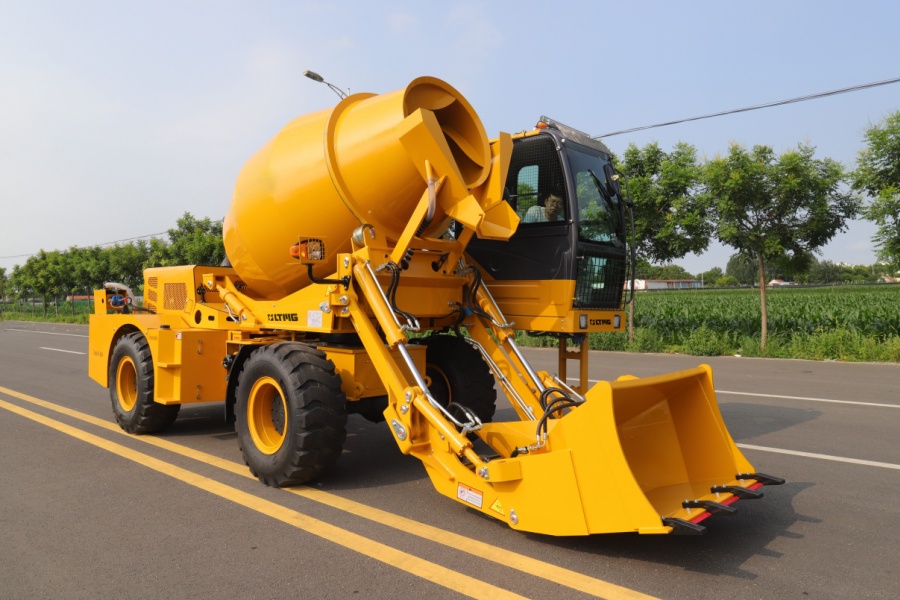
Keunggulan utama LTM26 adalah fleksibilitasnya. Mesin ini mengintegrasikan fungsi pemuatan, pencampuran, pengangkutan, dan pengeluaran ke dalam satu unit, sehingga menghilangkan kebutuhan akan alat pemuat dan peralatan pengangkutan tambahan sekaligus mengurangi jumlah mesin yang dibutuhkan di lokasi.
Selain itu, peralatan ini dilengkapi dengan kemudi artikulasi hidraulik dan kemampuan mendaki maksimum 40°, sehingga mampu beradaptasi dengan kondisi kerja yang menantang. Drum pencampur mendukung rotasi horizontal 270°, sehingga memudahkan pengeluaran beton di berbagai posisi dan meningkatkan kenyamanan pengoperasian di lokasi.
Bagi pelanggan dengan kebutuhan beton moderat dan lokasi konstruksi yang sering berubah, Mixer Beton Self Loading LTMG26 menawarkan keseimbangan ideal antara produktivitas dan fleksibilitas.
Untuk pembangunan jalan, proyek infrastruktur, dan aplikasi konstruksi skala besar yang membutuhkan pasokan beton terus menerus, produktivitas peralatan dan kemampuan operasi berkelanjutan menjadi semakin penting.
Mesin Pengaduk Beton Mandiri LTMG42 4,2m³ memiliki kapasitas pencampuran 4,2 m³ per batch dan dapat menyelesaikan hingga 5 siklus pencampuran per jam, mencapai output maksimum sekitar 20 m³/jam. Mesin ini dirancang untuk proyek konstruksi dengan persyaratan yang lebih tinggi untuk efisiensi pasokan beton.
LTM42 memiliki berat operasional sekitar 9.500 kg dan dimensi 7.500 mm × 2.950 mm × 3.500 mm. Dibandingkan dengan model kompak, alat ini memberikan kapasitas produksi yang lebih tinggi dan lebih cocok untuk operasi konstruksi jangka panjang dan berkelanjutan.
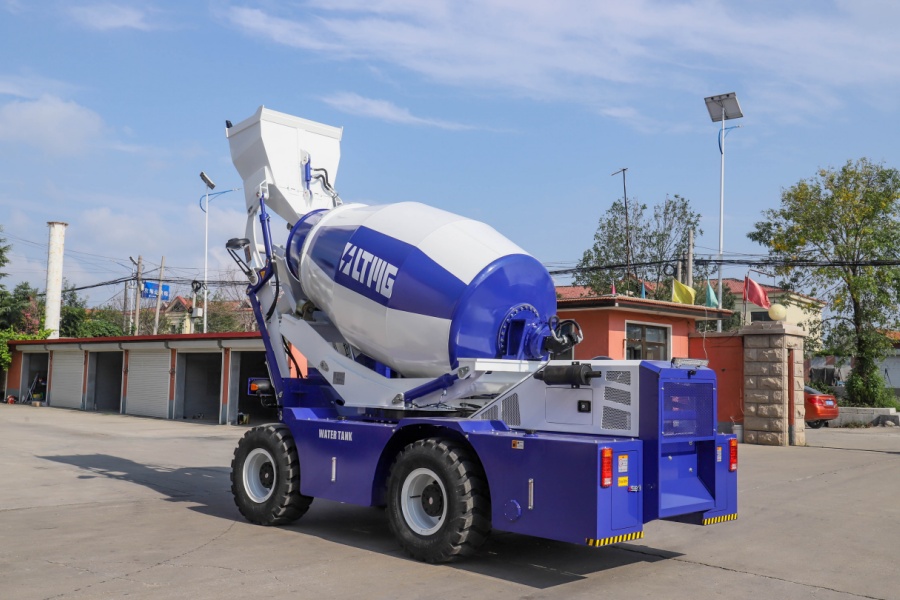
LTM42 dilengkapi dengan sistem pemuatan, penimbangan, dan pencampuran otomatis, yang mengurangi operasi manual dan meningkatkan efisiensi produksi beton di lokasi. Alat berat ini ditenagai oleh mesin diesel Yuchai YCD4P22T 125 dengan daya nominal 91 kW dan memiliki kemampuan penggerak empat roda. Dengan kemampuan mendaki maksimum 45°, alat berat ini dapat menangani berbagai lingkungan konstruksi yang menantang.
Selain itu, drum pencampur mendukung rotasi 270°, dan ketinggian pengeluaran mencapai 2,2 m, sehingga meningkatkan kemudahan pembongkaran di berbagai lokasi konstruksi.
Untuk proyek-proyek yang membutuhkan pasokan beton yang stabil dan efisiensi konstruksi yang lebih tinggi, Mixer Beton Self Loading LTMG42 memberikan produktivitas yang lebih besar dan kemampuan operasi berkelanjutan yang lebih kuat.
Mesin Pengaduk Beton Otomatis (Self Loading Concrete Mixer) mengintegrasikan fungsi pemuatan, pencampuran, pengangkutan, dan pengeluaran ke dalam satu mesin, sehingga memberikan solusi pasokan beton yang lebih fleksibel dan efisien untuk proyek konstruksi modern.
Memilih peralatan yang tepat memerlukan pertimbangan komprehensif mengenai skala proyek, kebutuhan konkret, kondisi kerja, dan persyaratan operasional jangka panjang. Model yang tepat tidak hanya dapat memenuhi kebutuhan konstruksi tetapi juga membantu perusahaan meningkatkan produktivitas dan mengurangi biaya operasional.
Jika Anda mencari Mesin Pengaduk Beton Otomatis yang sesuai untuk proyek konstruksi Anda, maka Tim LTMG Kami dapat memberikan saran pemilihan peralatan profesional dan solusi yang disesuaikan berdasarkan kebutuhan spesifik Anda. Hubungi kami hari ini untuk mendapatkan informasi produk lebih lanjut dan penawaran harga.

Telp : +86 195 5920 7570
Surel : market@ltmg.com
ada apa : +86 195 5920 7570
Menambahkan : LTMG Group, Electronics City(Xiamen) International Innovation Center, No.23, Duiying Road, Jimei District, Xiamen, China


Dapatkan Informasi Produk & Informasi Penawaran terbaru



